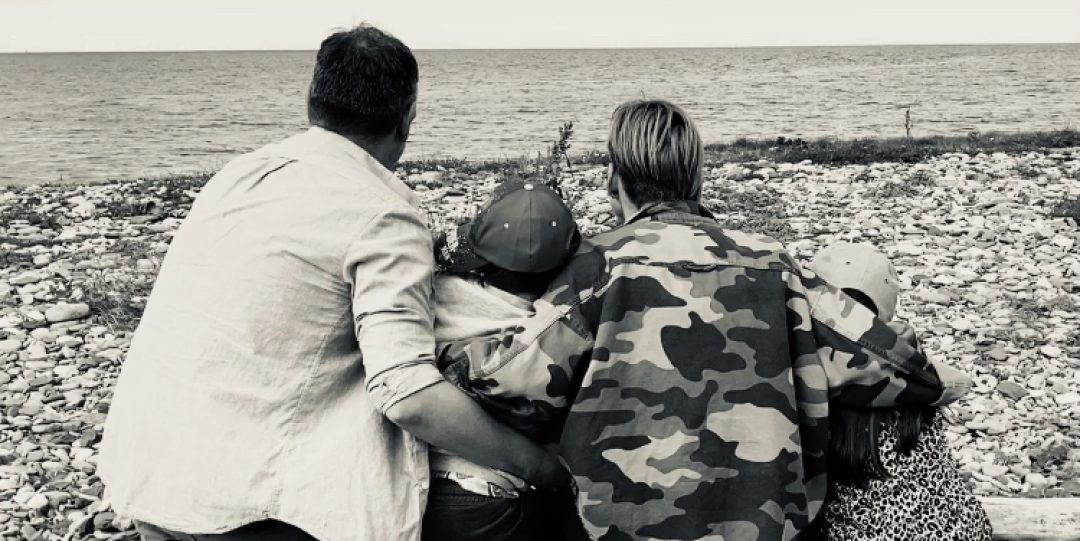

The battles no one see
In Part One of The Unseen, I reflected on how the last eight years have changed me as a person.
From being a relatively quiet and reserved bloke who preferred to blend into the background, to somebody who’s now writing blogs, recording videos and trying to get a book published.
Something I certainly wouldn’t have imagined myself doing all those years ago!
As I mentioned at the end of that blog, there’s another side to our story because whilst people might see the fundraising, the family holidays, the football matches and the smiling photographs on social media, there’s an awful lot that happens behind the scenes.
The decisions. The worries. The appointments. The responsibilities. The things that don’t necessarily make for particularly interesting Facebook posts!
That’s what I want to talk about today, not because I want sympathy and certainly not because I believe our challenges are any more important than anybody else’s but because I think there’s a side to being a SEND parent that people don’t always appreciate.
The unseen.
The admin!
One of the things I’ve learned over the last eight years is that being a parent and carer involves an awful lot more than the caring itself.
There’s the paperwork for a start and believe me, there’s plenty of it!
Forms, assessments, applications, appointments, telephone calls, emails and meetings. Sometimes it feels as though you need a qualification in administration just to get through an ordinary week!
Thankfully, Louise is far more organised than I am when it comes to all of this. She’s got everything neatly filed away in folders and seems to know exactly where everything is.
Which is just as well, because if it were left to me, we’d probably spend half our lives looking for paperwork I was convinced I’d put somewhere safe!
Then there are the conversations about education, accessibility and making sure your children have the right support in place.
As parents, we all want our children to have the best possible opportunities but when your children have additional needs, sometimes you find yourself having to explain, justify or fight for things that other families might never have to think twice about.
That can be extremely exhausting, not necessarily because the people you’re dealing with don’t care. We’ve met some wonderful professionals over the years who have gone above and beyond for our family but because systems aren’t always straightforward and sometimes getting the right support involves an awful lot of persistence.
There are times though when you find yourself repeating the same information to different people, filling in another form or attending another meeting to discuss something you thought had already been resolved.
Perhaps one of the most frustrating aspects is constantly having to explain what your children can’t do.
What they struggle with. What they need help with. What might go wrong.
When, as a parent, you spend so much of your time trying to encourage them, celebrate their achievements and focus on everything they can do.
That’s a difficult balance.
You want people to understand the challenges without allowing those challenges to define your children and when something affects their happiness, confidence or ability to feel included, it becomes much more than just another meeting or another form.
It becomes personal.
That’s when the relatively quiet bloke I spoke about in Part One sometimes has to find his voice again. Even when he’d much rather be doing something else!
The weight of making the right decision
I think one of the hardest things about being a parent of a child with a progressive condition like Duchenne is the responsibility that comes with making decisions and not just the everyday decisions that all parents face.
I’m talking about decisions that could have significant implications for your child’s health and quality of life, both now and in the future.
When Alfie was 4, we had to make the decision about starting steroid treatment. Prednisolone is commonly used steroid in the management of Duchenne because of the benefits it can offer, particularly in helping preserve muscle function but like many treatments, it also comes with potential side effects and longer-term considerations.
As parents, you find yourself weighing up those benefits against the possible consequences because long term use of steroids can affect growth, bone health and pubertal development, amongst other things.
Alfie has annual DEXA scans to monitor his bone health and we’re now at a stage where conversations about puberty and hormone treatment have become part of our lives.
These aren’t necessarily conversations you imagine having when you’re holding your newborn baby for the first time and they aren’t always straightforward.
We’ve discussed options that could involve applying a gel daily or having regular monthly injections which eventually would be administered by us.
Now, anyone who knows Alfie will know that needles aren’t exactly his favourite thing in the world! In fact, he has a significant needle phobia following a routine blood test that didn’t go according to plan and unfortunately that has stayed with him.
So suddenly, what might appear to be a relatively straightforward medical decision becomes something much more complicated.
You find yourself thinking about the benefits of a particular treatment, the possible side effects, how Alfie might cope with it and what it could mean for him in the longer term and then there’s the question that never seems to disappear.
Are we making the right decision?
There’s also the effect that long-term steroid treatment can have on the body’s ability to produce its own cortisol, which is particularly important during illness or physical stress.
That means understanding the risk of adrenal insufficiency, knowing when additional medical support or steroid cover might be needed and following the advice of Alfie’s specialist team.
Another responsibility to understand. Another thing to remember. Another situation where you want to be absolutely certain you’re doing the right thing and sometimes, even when you’ve listened to the professionals, asked the questions and carefully considered the options, you still find yourself wondering.
What if we’d chosen differently? What if there’s something we haven’t considered? What if we get it wrong?
Of course, we work closely with the professionals involved in Alfie’s care and we’re grateful for their guidance but ultimately, as parents, you still carry the emotional weight of those decisions and there’s another side to all this that people don’t necessarily see.
The impact it can have on you as a couple.
Louise and I haven’t always found ourselves to be on the same page when it comes to making difficult decisions.
We both want exactly the same thing. We want what’s best for Alfie and we want to make sure we’re giving him every opportunity to live the happiest and healthiest life possible. That doesn’t mean we always see things in the same way.
One of us might be more concerned about the long-term implications of a particular treatment, whilst the other might be thinking more about how it could affect Alfie in the here and now.
When there isn’t necessarily a straightforward answer, those differences can become emotionally challenging because you’re not arguing about something trivial.
You’re discussing decisions that could have a significant impact on your child’s life and sometimes, when you’re both worried, tired or overwhelmed, it’s not always easy to see things from the other person’s perspective.
I think that’s another aspect of being a parent and carer that doesn’t get spoken about enough.
The pressure it can place on relationships.
You’re two people trying to navigate circumstances neither of you ever imagined facing.
You can love the same people, want the same outcome and still find yourselves struggling to agree on the best way forward.
I suspect we’re far from the only family who experiences that.
Preparing for a future you wish wasn’t coming
Another thing people probably don’t appreciate about living with a progressive condition like Duchenne is the amount of preparation that goes into a future you hope is still a long way off.
I’m not talking about putting a bit of money aside for a rainy day or planning next year’s summer holiday.
I’m talking about making significant changes to your family home for things that haven’t even happened yet.
We’ve already had our home adapted to accommodate Alfie’s future needs. A ground-floor bedroom, an accessible bathroom incorporating a height-adjustable bath, both rooms of which are future proofed for a hoist and a self-cleaning toilet.
Not exactly the sort of home improvements you’d find yourself getting excited about while wandering around B&Q on a Sunday afternoon!
But here’s the thing…
Alfie doesn’t currently need many of these adaptations.
We’ve had them installed because we know that, as Duchenne progresses, his needs are likely to change.
It’s about future-proofing our home, making sure that when the time comes, we’re ready and whilst that might sound like sensible planning, there’s an emotional side to it that isn’t quite so straightforward.
I’ve often thought that it’s a little like being told there’s going to be a car crash somewhere down the road, perhaps years into the future and you’ve got to start preparing for it now.
You don’t know exactly when it’s going to happen or what the circumstances will be but you know you need to prepare and every time you make another preparation, you’re reminded of why you’re having to do it in the first place.
That’s probably the hardest part because we’re not simply adapting a house. We’re preparing for changes in our son’s life that, if I’m being completely truthful, we’d rather never have to face.
There’s also another way of looking at it.
These adaptations aren’t just about preparing for what Alfie might lose as his condition progresses.
They’re about protecting what he can continue to do. His independence. His dignity. His comfort. His ability to enjoy his own home without unnecessary restrictions and when I look at it that way, I realise how important those decisions have been.
We haven’t made these changes because we’ve given up hope or because we’re constantly looking towards the worst-case scenario.
Quite the opposite.
We’ve made them because we want Alfie to have the best possible quality of life, both now and in the years ahead.
At least we know that when Alfie’s needs change, our home won’t have to change overnight and perhaps that sums up one of the strangest contradictions of being a Duchenne parent.
You spend so much of your time trying to live in the moment, whilst simultaneously having to prepare for a future you wish you could put on hold.
The ever-expanding bubble
I’ve mentioned the physical demands, the paperwork, the appointments and the decisions but perhaps the hardest thing to explain is the mental load that comes with it all.
It’s difficult to describe, but I sometimes imagine it as a bubble that’s constantly expanding.
Every appointment, every form, every phone call, every worry about the future adds just a little more pressure. Another folder for Louise to prepare!
You keep expecting it to burst, but somehow it doesn’t. It just keeps getting bigger and bigger.
A bit like Violet Beauregarde in Charlie and the Chocolate Factory, after she’d chewed that three-course dinner chewing gum!
Although, unlike Violet, I haven’t yet turned purple or needed a team of Oompa-Loompas to roll me away. Not yet, anyway!
Joking aside, I think that’s probably one of the hardest things to explain about being a parent and carer.
It’s not necessarily one enormous problem that overwhelms you.
It’s the accumulation of hundreds of little things, many of which nobody else ever sees. Usually it’s the smallest one that can sometimes tip you over the edge!
You might be sitting watching the football, walking the dog or enjoying a meal, but somewhere in the back of your mind there’s always something else ticking away.
Have we remembered that appointment? Is there another form we need to complete? Have we made the right decision about that treatment? What will Alfie need in a few years’ time? Are we doing enough for Mila-Rose?
Somewhere amongst all those thoughts, you’re also trying to remember the everyday things that come with being a dad and occasionally, just yourself.
Whilst Alfie’s Duchenne understandably brings its own challenges, we also have Mila-Rose’s autism to consider.
Two children. Different needs.
Different personalities and like any parent, we’re trying to make sure they both have the support, attention and opportunities they deserve.
There have been times when that bubble has felt dangerously close to bursting.
Over the last year, I’ve had to make some difficult decisions about my own wellbeing and working life. Eventually, I reached a point where trying to balance employment, caring responsibilities and my own mental health was becoming increasingly difficult.
I made the decision to leave my job.
That wasn’t something I’d ever imagined having to do. Work had always been a significant part of my life and stepping away from it brought its own emotions and uncertainties. I’ve gradually come to realise that sometimes being strong doesn’t mean carrying on regardless.
Sometimes it means recognising that something needs to change and that’s not always an easy thing to admit, particularly when you’re somebody who’s spent years trying to keep everything moving.
I think there’s also a tendency amongst parents and carers to feel guilty about wanting time for themselves. As though taking a break, going for a walk, listening to music or simply having an afternoon where you don’t want to think about appointments and responsibilities somehow means you’re not doing enough.
I’ve learned that those little moments are important.
Whether it’s walking, putting on a favourite song, writing down my thoughts or simply admitting that I’ve had enough for one day, sometimes you need to let a little pressure out of that bubble.
Preferably before the Oompa-Loompas have to get involved! Another song you will now find engrained in your head!! Doompety da! You’re welcome!!
The moments that make it worthwhile
I don’t want anybody reading this to come away thinking that our lives are defined entirely by appointments, worries and challenges because they’re not. Far from it.
There have been incredible experiences, wonderful friendships and memories that we wouldn’t swap for anything and there are the smaller moments too. The little achievements that might not seem particularly significant to somebody else but can mean the world to us.
Seeing Mila-Rose and Alfie try something new. Watching them overcome something they previously found difficult. Seeing them grow in confidence or enjoy an experience that perhaps once seemed out of reach.
Those moments matter.
Sometimes, I think they matter even more because we understand how much effort might have gone into making them happen.
That’s another part of The Unseen. People might see a photograph of a family enjoying a day out. What they might not see is the planning that went into it.
The accessibility arrangements, the conversations beforehand, the adjustments along the way or the things we’ve had to think about to make sure everybody can enjoy themselves but the photograph is still genuine. It might just have been the 43rd attempt to take said photograph!
The memories though are every bit as special.
The challenges and the happiness aren’t opposites. They’re both part of our lives.
Whilst I wouldn’t wish some of the difficulties we’ve faced on anybody, I also wouldn’t want those difficulties to overshadow everything that’s wonderful about Mila-Rose and Alfie.
Before you go…
If there’s one thing I’d like you to take away from this blog, it’s that you never really know what’s going on in somebody else’s life.
We all have our worries, frustrations and difficult days and I’m certainly not suggesting that one person’s problems are any less important than somebody else’s.
Perhaps, just occasionally, it’s worth taking a moment to look at things from a different perspective.
The next time you’re frustrated because your child has left their bedroom untidy, won’t get out of bed or has disappeared upstairs without so much as a goodbye, perhaps take a second to appreciate what those little moments also represent.
Independence. The ability to do things for themselves.
To make choices, explore the world and gradually become less reliant on you. Things that many parents understandably take for granted, but which others would give almost anything to see their children experience.
That’s not meant to make anybody feel guilty for having an ordinary parenting frustration. It’s simply a reminder that the everyday things we sometimes overlook can mean something very different to another family.
Also, the next time you see a parent struggling with their child in a supermarket, cancelling plans at the last minute, looking exhausted or perhaps behaving in a way you don’t quite understand, try not to be too quick to judge.
You don’t know what their morning has been like.You don’t know how many battles they’ve already fought that day and you certainly don’t know what might be waiting for them when they get home.
I’m not asking anyone to feel sorry for us. That’s never been the point of sharing our story. Alongside all those wonderful moments, there are challenges that most people will never see.
Perhaps that’s the message I want to leave you with…
Be grateful for the little things. Be kind to people whose circumstances you might not understand and before you judge somebody else’s life, remember that you’re probably only seeing a tiny part of it.
Sometimes, the biggest battles are the ones nobody knows are being fought.
The unseen.
Thanks for reading,
Kieron x
Another great Vlog and insight Kieron. What goes on behind the scenes that no one sees is a lesson we all can learn from. Keep going lad. Graeme G (aka George) YNWA x
Love the ‘being told there’s going to be a car crash somewhere down the road and you’ve got to start preparing for it now’. It’s exhausting! Brave putting your thoughts out there Kieron 💪